












Líderes da UE deverão confrontar-se sobre o próximo orçamento da União e o apoio futuro à Ucrânia numa cimeira crucial em Bruxelas
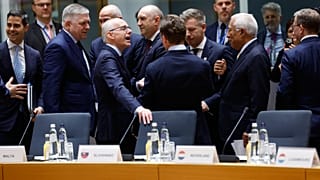
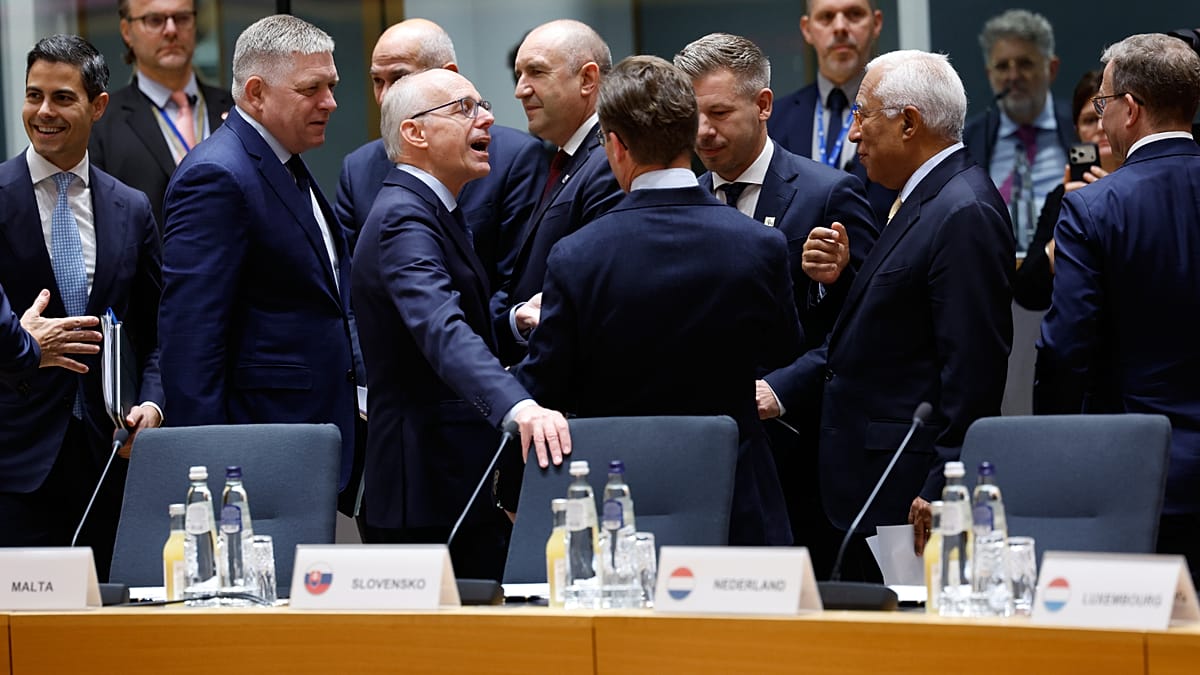
Os líderes da UE vão reunir-se em cimeira em Bruxelas, num ambiente tenso, para discutir o orçamento iminente e o futuro apoio à Ucrânia.
 PUBLICIDADE
Em cima da mesa estão duas propostas.
A primeira, do presidente do Conselho Europeu, António Costa, é um orçamento de sete anos no valor de quase 1,7 biliões de euros, que alguns líderes consideram excessivo e outros insuficiente.
A segunda, da Comissão Europeia, é um empréstimo de apoio de 45 mil milhões de euros à Ucrânia, financiado através de dívida conjunta. Quatro países, a Eslováquia, a Chéquia, a Hungria e Budapeste, querem ficar de fora do empréstimo, o que está a irritar os doadores bilaterais de Kiev.
Embora o orçamento e o empréstimo sejam tecnicamente separados, tornaram-se politicamente interligados, criando uma combinação potencialmente volátil. Afinal de contas, ambos dizem respeito a dinheiro.
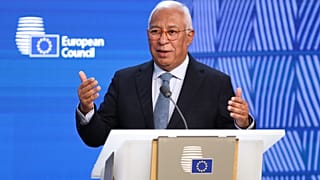
“Agora é altura de todos os líderes participarem neste debate com mente aberta, com uma atitude construtiva no sentido do compromisso, porque precisamos de aprovar este orçamento até ao fim deste ano”, afirmou Costa na manhã de quinta-feira.
Também está em discussão a sucessão de Christine Lagarde à frente do Banco Central Europeu. O candidato espanhol, Pablo Hernández de Cos, ganhou vantagem sobre Klaas Knot, dos Países Baixos, e é amplamente apontado como favorito a assegurar o cargo de topo.
Siga o live blogue, em inglês, da Euronews.

 ${title}
'Going too far': Bulgarian PM blasts EU's latest Russia sanction plans
Bulgarian Prime Minister Rumen Radev has criticised the European Commission's proposed package of sanctions against Russia, which, among other measures, targets Russian sports figures.
"We are going too far in politicising sporting and cultural events in this way,'" he said as he arrived at a European Council summit focused on support for Ukraine and the EU's next long-term budget.
The European Commission unveiled its latest sanctions package against Russia last Thursday, proposing to ban Russian sports teams and athletes competing under the Russian flag, as well as the display of official Russian symbols, from all sporting events inside the bloc.
It also wants to ban Russian nationals from making financial donations to, or holding positions within, governing bodies of European-based sports federations.
"Sports events can not be a forum for propaganda activities," European Commission President Ursula von der Leyen said last week when unveiling the latest package — the 22nd since Russia's full-scale invasion of Ukraine in 2022.
Brussels aims for a deal on the latest sanctions package in December before the Christmas break.
Who pays the EU’s new taxes?
European leaders are discussing a mix of new EU taxes, known as own resources, to finance the bloc’s next seven-year budget. They include measures involving electronic waste, unrecycled plastic, digital levies, carbon markets and tobacco. But who is going to pay for them?
Euronews breaks down how much each new tax is going to yield in terms of revenues, and who is going to foot the bill.
Spoiler alert: the own resources impact the EU countries asymmetrically, shaping the national position on each of them.
Who pays the new EU taxes? A breakdown of who will foot the bill
EU member states are discussing a package of new Europe-wide taxes to finance the bloc's next long-term budget. But where is the money coming from? Euronews pr…
Estonian PM warns of Ukraine 'winter like hell' as EU funding row looms
Estonian Prime Minister Kristen Michal has warned that Ukraine faces a winter "like hell" and urged the EU to maintain its support for Kyiv.
Leaders at the EU summit will discuss how to fill the funding gap for Ukraine, but four member states – Hungary, the Czech Republic, Slovakia and Bulgaria – have signalled they will not take part in a joint loan.
"Ukraine will probably face a winter that is like hell. They must know that Europe has their back in terms of money. We must decide on Ukraine funding," Michal said, adding that the EU should not cut its defence spending in the next budgetary period.
The prime minister said Estonia's border closure with Russia, which takes effect next week, will boost European security.
"You cannot tolerate attacks on NATO territory, against the defence industry. And Russia has the special services, filtering everybody who crosses the border and taking advantage of that information. So that increases the security of Europe, that we close the east border."
Estonia decided to close the border for six months in response to a wave of Russia-linked hybrid attacks targeting Estonian defence companies.
'Weak economy and expensive energy are holding Europe back,' Kulbergs says
Latvia's PM Andris Kulbergs has warned that high energy costs and excessive bureaucracy are undermining the bloc’s – and represent a key obstacle to reaching a deal on the EU’s next long-term budget.
“The biggest problem is economy,” Kulbergs said, pointing to weak growth as a source of wider instability across Europe.
The Latvian leader said the budget must be concluded this year, given the urgent demands created by the war in Ukraine and the bloc's growing security and defence needs.
However, Kulbergs added that the negotiations are taking place against a backdrop of economic stagnation and political discontent.
Bulgaria will join Ukraine loan but not its military strand, Bulgarian PM says
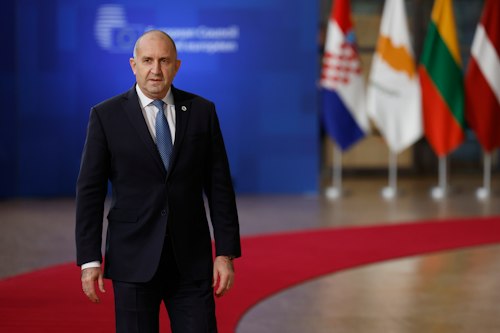
Bulgaria will not seek a blank opt-out of the new €45 billion support loan to Ukraine after all, Bulgarian Prime Minister Rumen Radev confirmed on Thursday morning. Radev had previously said Bulgaria would not take part in the scheme.
Instead, the country will remove itself from the military strand (€25 billion) and only take part in the financial strand (€20 billion).
"We have a huge historical diaspora of 300,000 Bulgarians living in Ukraine. And our wishes and our request (are) to concentrate our support in the areas of the Bulgarian population in Ukraine," Radev said.
"So we are going to contribute, but again, no money from Bulgaria for weapons, no money for war in Ukraine."
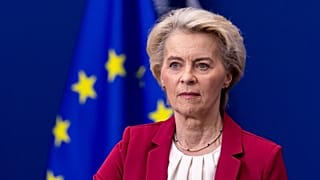
Radev says he will discuss the issue with European Commission President Ursula von der Leyen, who presented the loan last week. Von der Leyen said member states with reservations about military support could opt in only to the financial side of the scheme.
While this is good news for the Commission, three countries remain opposed to the loan altogether: Slovakia, Hungary and the Czech Republic. It remains to be seen if they can be brought into the fold.
Credit: Associated Press
Latvia says EU budget plans undermine farmers
Latvia's Prime Minister Andris Kulbergs accused the EU of failing to deliver a level playing field for farmers, arguing that the bloc’s next long-term budget risks entrenching splits in agricultural aid between member states.
“Latvia has been punished for 20 years,” Kulbergs said, describing the country as having the lowest level of agricultural support in Europe.
Kulbergs said the country had come to defend the EU’s core values of reducing inequality and promoting free trade — principles that, in Latvia’s view, are being undermined by the proposed budget.
“We’re seeing in our shops all the products from the countries that are getting the most support for farmers (...) You don't see Latvian products in the European market," Kulbergs said.
'Political motives' may spur on EU deficit warning for Sofia, Bulgarian PM says
Bulgarian Prime Minister Rumen Radev has criticised a recent warning from Brussels over excessive public spending, saying the European Commission "needs" to examine "things" relating to how it "realistically" assesses member states' finances.
"If it does not do so, it means that there are political motives, rather than economic ones, behind our accession to the eurozone," he said as he arrived at Thursday's European Council summit, which is focusing on the bloc's long-term budget.
"How is it that the Commission has only now realised that budgetary funds in Bulgaria are being spent indiscriminately, without the necessary oversight?"
"How is it that inflation in Bulgaria suddenly fell in April to May last year?"
Radev previously described the Commission's warning as a "stinging rebuke" of previous governments' public spending policies.
European Commissioner for the Economy Valdis Dombrovskis warned on Tuesday that Sofia could face a multi-million-euro fine if it failed to address excessive spending "late this year or very early next year".
No real peace negotiations with Russia until spring, Lithuania’s Nausėda says
Lithuania’s President Gitanas Nausėda said he is pessimistic about the prospect of real negotiations on the ceasefire with Russia until next spring.
"I think the Russians will try to let Ukraine and its people suffer one more terrible winter, and they treat this possibility as a kind of leverage,” he said.
Nausėda insisted the EU as a whole should support Kyiv, because the Ukrainians are not just fighting for their freedom but for the freedom of the whole of Europe.
“Ukraine could and should negotiate from the strongest side. If they feel this deficit of financial resources or military equipment, of course, the Russian Federation will be in a better position to start negotiations,” he continued.
Latvia says EU budget must stop penalising countries defending its eastern border
Latvia's PM Andris Kulbergs has demanded a bigger share of the EU's next long-term budget, arguing that countries defending the bloc’s eastern border should no longer face economic burdens while carrying more and more for security and defence.
"We remember that there was support in Europe when it was about migration. And now it's the eastern flank's turn, because we are the ones defending the EU's border," Kulbergs said.
"The Baltics need to get the support to get our economy up to speed, so we can allocate resources for defence."
Cohesion and supporting Ukraine are both about solidarity, Lithuania’s President says
“For me, both issues are a matter of solidarity. First, the solidarity with Ukraine and the second, solidarity within the European Union,” said the President of Lithuania, Gitanas Nausėda.
For the Lithuanian leader, Costa’s proposal on the EU budget is a very good starting point for the leaders’ discussion. Still, he criticised the cuts to the Connecting Europe facility, the funding program for infrastructural projects.
“What disappoints me a bit, of course, is the reduction of national envelopes. My country has not completed the conversion process. We are at 90% of the European Union average. Our farmers receive only about 80% of direct payments of European Union average,” he said.
For Nausėda, it is also not fair that regions in the far north of the bloc receive additional financial support, while that is not the case for the regions at the eastern border despite the daily threats from Russia and spillovers from the war in Ukraine.
Black Sea security to feature in EU talks as Romania warns of wider regional risks
Black Sea security will be raised during the talks as Romania seeks to keep the strategic importance of the region high on the European agenda amid the war in Ukraine, the country's President Nicușor Dan told reporters.
Dan said the issue would feature in informal discussions with other EU leaders, following a dedicated session on Black Sea security at NATO.
“Black Sea security will also be raised,” Dan said, adding that the issue continued to feature in discussions with Romania’s allies within the Alliance.
The remarks underline how the war in Ukraine has placed the Black Sea at the centre of European security concerns, with the conflict carrying risks beyond Ukraine’s borders.
Romania borders the Black Sea and sees the region’s security closely tied to the outcome of the war and the broader relationship between Russia and NATO.
Costa calls on leaders to have 'open mind' and 'compromise' on EU budget
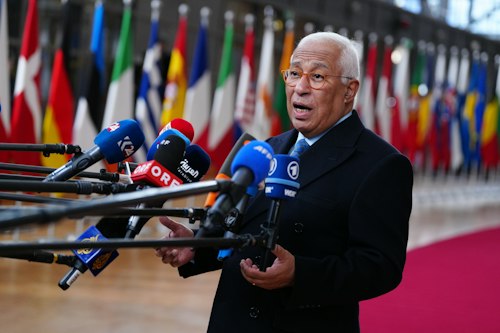
European Council President António Costa, the moderator-in-chief of today's talks, has urged the 27 leaders to have an "open mind" and move beyond their red lines on the EU budget. Costa has tabled a revised proposal worth €1.7 trillion for seven years.
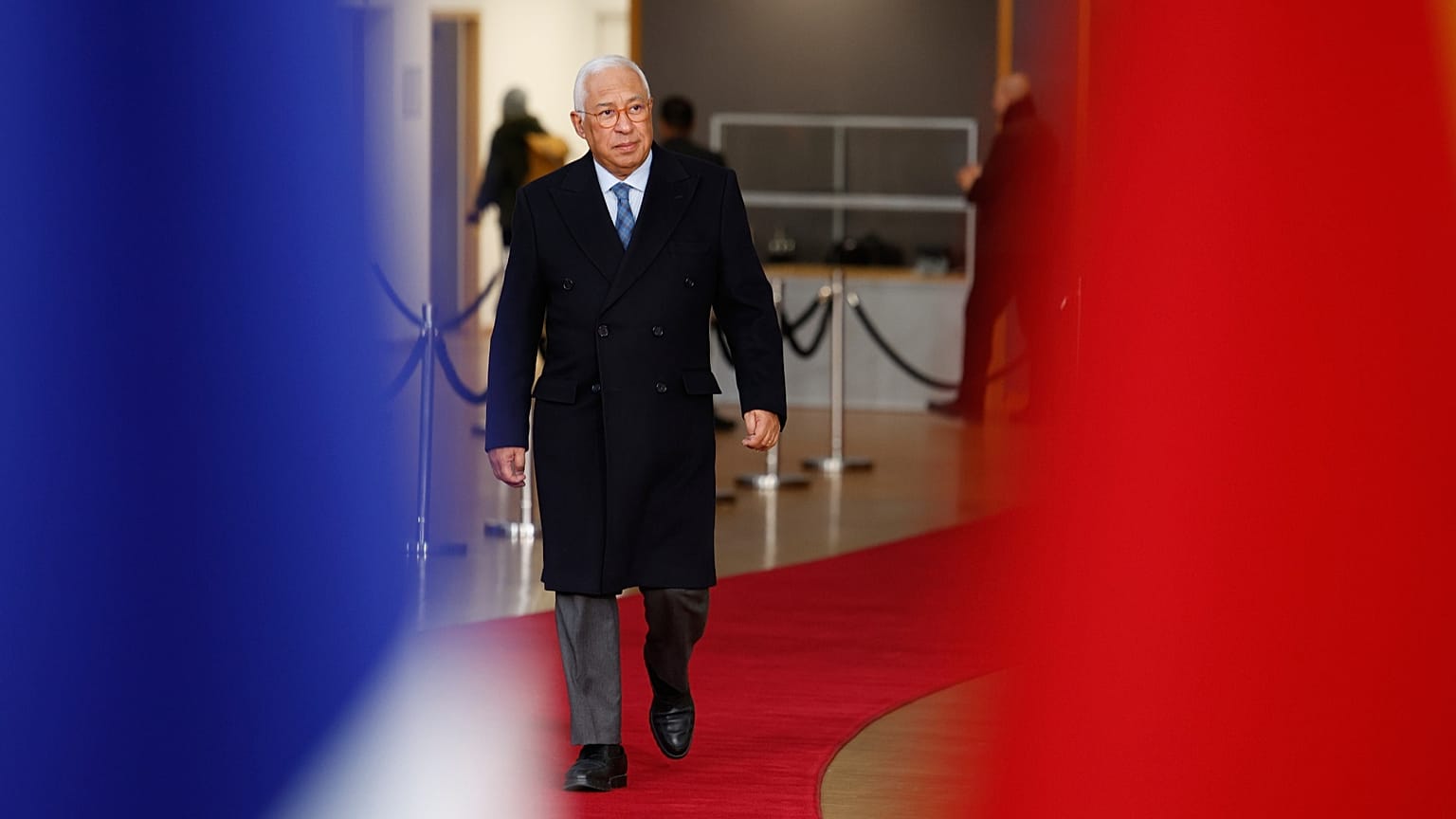
"Now it's time for all of the leaders participating in this debate with an open mind, a constructive approach in the sense of compromise, because we need to approve this budget (in time). That means by the end of this year, and for this, we need to reach unanimity," Costa told reporters upon arrival.
"The European budget is not like the national budget. It's enough to have a majority now. We need unanimity, and to have the unanimity, all the leaders need to listen to each other, taking into account the positions of the others in order to have a common landing zone."
Costa says he aims to bring leaders "closer" on three main areas: the overall size of the budget, the distribution of its priorities, and the package of EU-wide taxes, also known as "new own resources".
"We need the long-term budget fit to fund our main priorities. We need to support our farmers. We need to support our cities and regions. We need to invest more in security, in defence. We need to boost competitiveness, and we need to answer to the expectations of our citizens," he said.
Costa will wait until the end of the day to decide whether the summit should continue on Friday.
Credit: Associated Press.
Romania warns winter may delay prospects for peace in Ukraine
Romanian President Nicușor Dan said the coming winter could make a ceasefire in Ukraine less likely in the short term, as Russia seeks to exploit pressure on the country’s energy infrastructure and civilian population, Romania’s leader said ahead of today's EU summit.
While EU leaders are expected to discuss the possibility of a ceasefire, the Romanian leader expressed doubts that Moscow is currently prepared to end the war.
“I do not believe that Russia is prepared for — or even desires — peace at this moment,” Dan said.
Russia’s strategy, according to the Romanian assessment, is based partly on the expectation that winter will intensify pressure on Ukraine.
“Russia’s current calculation is that winter works to its advantage, as it places additional pressure on Ukraine’s energy infrastructure and on Ukrainian society as a whole,” the Romanian leader added.
Proposed EU budget cuts 'moving in the right direction', Swedish PM says
Swedish Prime Minister Ulf Kristersson said proposed cuts to the EU’s next long-term budget were "moving in the right direction", but warned of tough negotiations ahead of Thursday’s extraordinary European Council summit.
On Saturday, European Council President António Costa proposed a 10% reduction to the European Commission’s almost €2 trillion budget proposal. The cuts aim to appease the 27 EU leaders, all of whom must give unanimous approval to the seven-year budget, which will take effect in 2028.
Asked whether an agreement on the budget would be reached by the end of the year, Kristersson said it would be "difficult".
"We are not in a hurry," Kristersson said, "but we need to finalise it sooner or later."
"We are not there yet."
Romania demands bigger budget alongside 'Friends of Cohesion' group
Romanian President Nicușor Dan said Costa’s latest proposal "is not ideal”
"Europe should show greater ambition for the 2028–2034 period, especially given the many challenges we know exist,” said Dan.
Leading the “Friends of Cohesion” group alongside Italy, the Romanian leader said the countries are having a coordination meeting to discuss the budget throughout the afternoon and tomorrow.
"One of the goals of the "Friends of Cohesion" group was to act in unison. That has been our strength. We are 17 states acting together, and that clearly carries weight,” Dan said.
Czechia’s Babiš rejects link between cohesion funding and Ukraine financing
Czech Prime Minister Andrej Babiš reiterated that he considers it not possible to link the financing of Ukraine with the cohesion funding in the next EU budget.
“Cohesion is really the goal of the European Union and the Czech Republic will fight for this money,” he said. “37 years after the revolution, we don't have any highway to Austria, unfortunately. And we have to build our hospitals; we have healthcare in the first place.”
For Babiš, who has already said Czechia wants to opt out of the incoming new loan to support Ukraine, the financing of Kyiv should be negotiated separately, not together with the rest of the EU budget as requested by German Chancellor Friedrich Merz and other frugal countries.
“The most important is the life of our citizens, and we have to do everything to organise the peace in Ukraine,” the Czech leader said.
'No EU country can opt out of' Ukraine support, Dutch PM says
Dutch Prime Minister Rob Jetten has said that no member states should opt out of the new €45 billion support loan to Ukraine.
But Slovakia, the Czech Republic, Hungary and Bulgaria have already announced they would not take part. For Jetten, whose country is one of the leading bilateral donors to Ukraine, this stance is unacceptable.
"It's crystal clear that the Russian aggression in Ukraine is one of the biggest challenges that we face. And Ukrainians are fighting for their own freedom, but also for European democracy and values," Jetten said.
"We need to stand shoulder to shoulder with the Ukrainians (who) will need more military and financial support in the years to come. And that is something that no EU country can opt out of. Everyone needs to be in solidarity with the Ukrainians, just like the Netherlands has been doing for many years."
Asked about the ongoing peace talks, Jetten called on Russian President Vladimir Putin to engage seriously in the process.
"We don't see any clear indication from the Russian president that he is willing to negotiate a just and lasting peace," he said. "So as long as there's no genuine negotiation, we need to do whatever it takes to support the Ukrainian people."
EU budget 'not acceptable' and must be 'downsized', Dutch PM says
Dutch Prime Minister Rob Jetten, a vocal member of the so-called "frugals", is the first EU leader to arrive at the summit.
His message is crystal clear: the EU buget currently on the table, worth almost €1.7 trillion, is "not acceptable for Dutch taxpayers" and must be trimmed down and re-focused on modern priorities such as defence and migration management.
"The budget needs to be modernised and needs to be downsized, if we want to strike a deal," Jetten said.
Asked about the goal of having an agreement by the end of the year at the latest, Jetten said, "there's no need to hurry", and that what matters is reaching a "good deal" in the end.
"For me there's no deadline," he said, noting he was "ready for the marathon" of the negotiations both this week and in December.
Missing in action: Pedro Sánchez
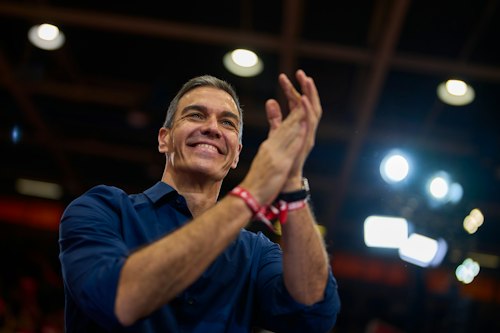
Europe's most prominent progressive leader, Spain's Prime Minister Pedro Sánchez, will skip today's crucial summit as he fights for re-election at home.
Sánchez called snap elections last month after two housing bills proposed by his left-wing coalition were voted down in Parliament amid housing crisis protests on the streets. Sánchez thought the popular outcry would help him secure re-election, but the conversation has since changed.
Most polls predict the right-wing Popular Party (PP) will secure victory and enter the government in coalition with the far-right, Vox. But Sánchez has a history of defying the odds, so nothing can be taken for granted. We'll find out on Sunday.
Sánchez has already missed two high-profile meetings this month: the informal EU summit in Dublin and the Coalition of the Willing in Berlin.
Credit: Associated Press.
A turbulent summit lies ahead
Good morning and welcome to the Euronews live blog!
Today's summit is poised to be turbulent, to say the least. Two of the EU's most contentious issues are set to collide: the next EU budget and future support for Ukraine. Though technically they are separate, they have become increasingly intertwined, making for a potentially explosive mix. After all, they're both about money.
You can read more in my curtain-raiser.
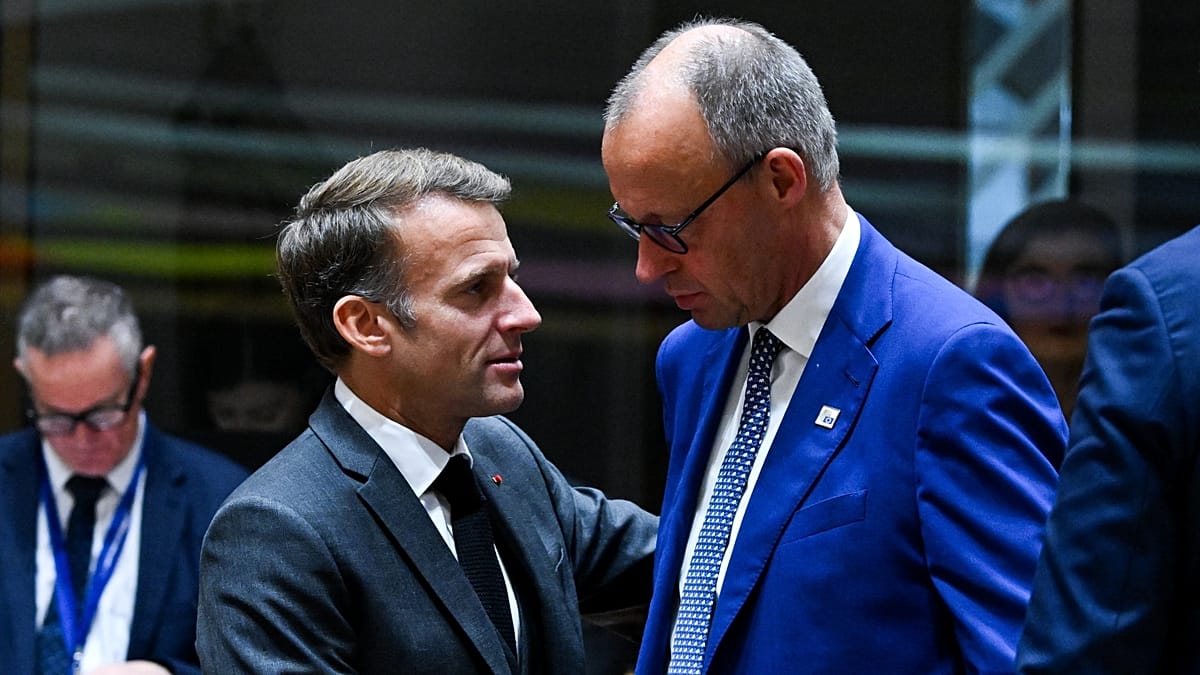
EU budget and Ukraine aid headed for collision at turbulent summit
EU leaders will have their hands full as they wrangle over the next budget and future support for Ukraine. Both issues make for a potentially unpredictable mix.
Notícias relacionadas