




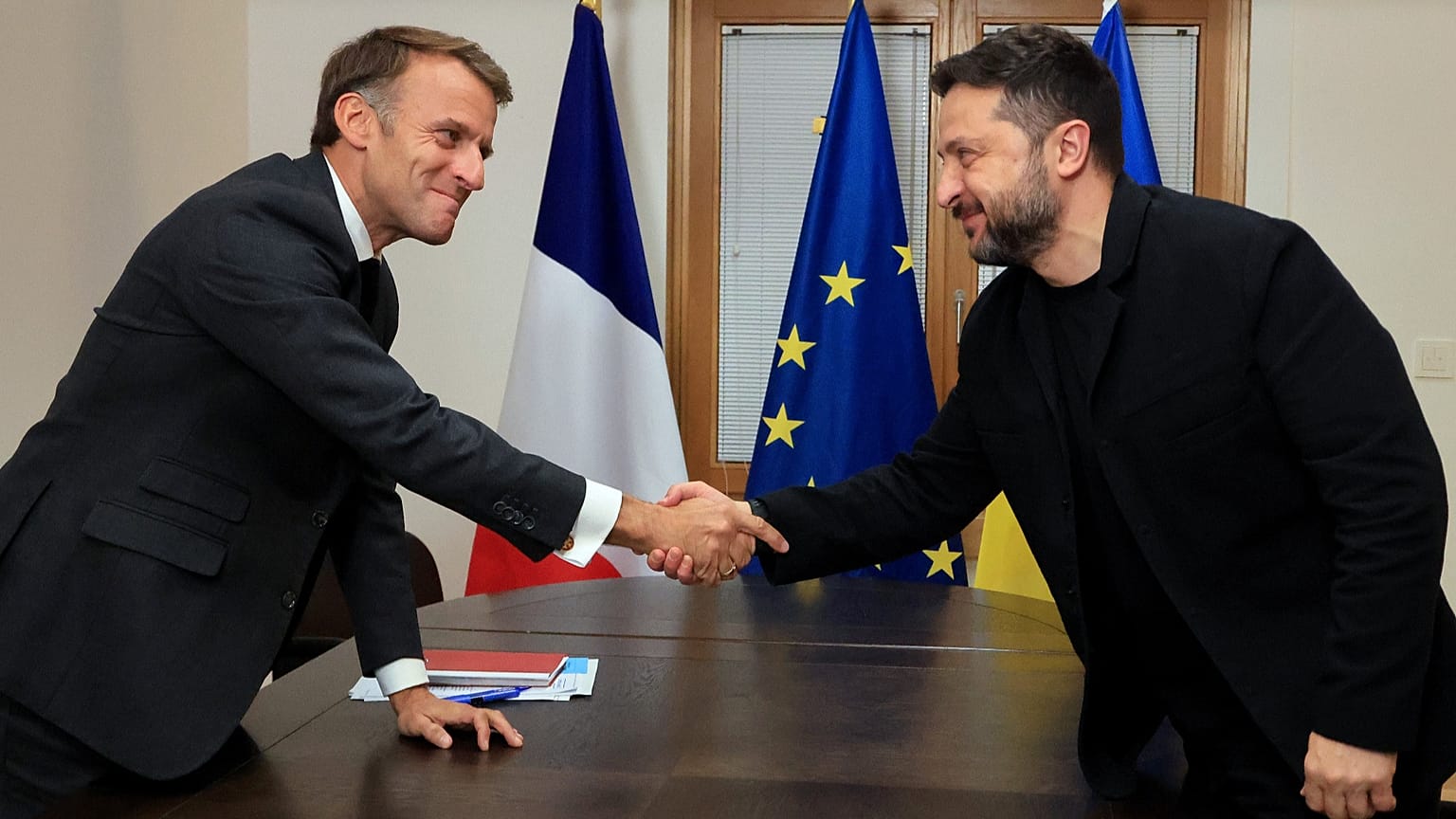












Tensões crescentes entre Zelenskyy e Trump marcam segunda jornada da cimeira da UE com presença do líder ucraniano na sexta-feira
Os líderes da União Europeia preparam-se para manifestar o seu apoio ao presidente ucraniano Volodymyr Zelenskyy, que participa no segundo dia da cimeira em Bruxelas, num momento de grande confronto com o presidente dos Estados Unidos da América, Donald Trump, cujo acordo de fornecimento de gasóleo com a Rússia abalou a aliança.
 PUBLICIDADE
PUBLICIDADE
PUBLICIDADE
Trump exigiu que a Ucrânia ponha termo aos ataques às refinarias de petróleo russas, que, segundo o presidente norte-americano, estão na origem da subida dos preços dos combustíveis. Zelenskyy respondeu afirmando que a origem da perturbação está, na realidade, na guerra de Trump contra o Irão.
Zelenskyy garantiu que a campanha contra a indústria petrolífera russa continuará sem abrandar, desvalorizando os receios de que Washington possa cortar o fornecimento de informações de inteligência em retaliação.
Vários líderes europeus, que consideram os ataques de longo alcance como a principal alavanca de Kiev sobre Moscovo, deverão unir-se em torno do dirigente ucraniano para projetar uma frente comum, numa fase em que a aliança transatlântica atravessa mais uma crise de unidade.
Acompanhe as atualizações no nosso liveblog em inglês.

 ${title}
'Increase pressure on Russia,' Costa says
“This is no time to relieve Russia’s sanctions. Now is the time to increase our support and increase our pressure,” European Council President António Costa said, adding that Moscow must be pushed towards a genuine ceasefire and negotiations to end the war.
Costa also looked ahead to Ukraine’s European future, with a pledge that EU support must extend beyond the battlefield to helping the country become a member of the bloc.
“This is time for peace. It is not time to continue the war,” Costa said.
"This week we opened more two clusters in our negotiation process (with Ukraine). We need to continue in this process, and I would like to commend you," Costa said, addressing Ukrainian President Volodymyr Zelensky.
Czechia’s PM praises Šefčovič as ‘best Commissioner’ following deal with China
The Prime Minister of Czechia, Andrej Babiš, praised the European Commissioner for Trade, Maroš Šefčovič, as “by far the best Commissioner – an incredible man who has secured some excellent deals for European industry.”
Šefčovič has been leading the EU negotiations with China, in an attempt to rebalance a massive trade deficit that many European leaders consider unsustainable. Last week, he announced an initial deal to cap the imports of hybrid cars.
During yesterday’s discussion, many heads of government stated that they were planning a state visit to China, Babiš said, which remains a partner of strategic importance, most notably for raw materials.
“China not only subsidises its products, but also constantly devalues its currency by 20 per cent, thereby gaining a further advantage. That is why, as a politician, I have always said that we will never allow ourselves to be part of the eurozone, because the Czech koruna gives us precisely the flexibility that, should anything happen in Europe or the wider world, we still have the means to deal with it,” he said.
'EU won't lift sanctions unless Russia stops war,' von der Leyen says
Ursula von der Leyen left no doubt on Friday that the European Union will refuse to lift sanctions on Russia until Moscow ceases its war of aggression against Ukraine, implicitly rebuking Donald Trump for striking a diesel deal with Vladimir Putin.
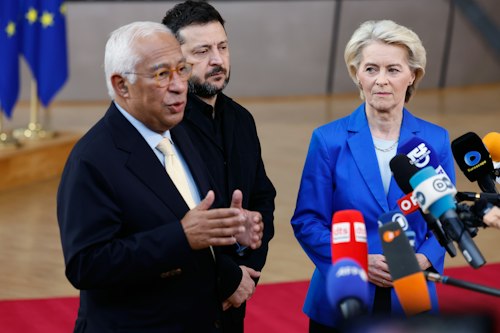
"We have to increase the pressure on Russia. We are working now on the 22nd sanctions package. And one thing is absolutely clear. We will not lift any sanctions unless Russia stops the war," the president of the European Commission said on Friday morning, speaking next to Volodymyr Zelenskyy.
Von der Leyen backed the energy ceasefire proposed by Donald Trump, which Russia has rebuffed, and said Brussels was working on a new package to support Ukraine ahead of a winter expected to be the harshest yet of the war.
"Russia is trying everything to destroy the energy and water infrastructure. But we stand by your side. We will support you as we did in the other winters," she told Zelenskyy. "We supported President Trump's energy ceasefire, but we've seen that Russia did not respect it. Not a single minute. Instead, Russia escalated.
Von der Leyen praised the Ukranian parliament for "working so hard to deliver the reforms" necessary to advance Kyiv's accession process. The two remaining clusters of negotiations should be opened by the end of the year, she said.
Credit: Associated Press
Zelenskyy says energy and air defence top Ukraine's priorities at EU summit
Volodymyr Zelenskyy said securing energy supplies, air defence and funding for the coming winter would be his top priorities at Friday's EU summit in Brussels, warning that Russia was showing no willingness to end the war.
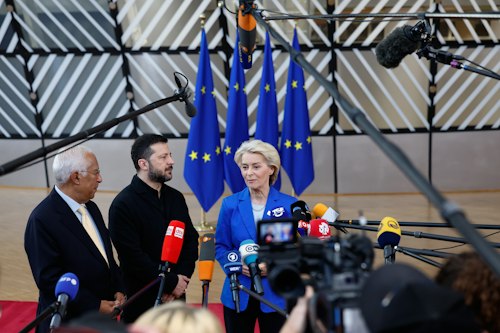
Speaking alongside António Costa and Ursula von der Leyen upon his arrival, Zelenskyy stressed the urgency of preparing for the months ahead, with discussions also covering Ukraine's needs in 2027.
"We don't see now signals, from Russian side that they are ready for this to end this war," he said.
"That's why we have to prepare for the winter. Winter package. It's not only energy, it's also air defence and fundings."
Zelenskyy also thanked European leaders for their continued support, pointedly describing them as "real leaders" who had stood by Ukraine since the beginning of the war.
"I'm so thankful that we have such huge support from EU Council, Commission and leaders, real leaders," he said.
Turning to Ukraine's EU accession, Zelenskyy welcomed progress in the negotiations and praised the Ukrainian parliament for passing reforms despite sustained Russian attacks.
"We'll do everything to open two last clusters to the end of the year, and I'm sure that we will do it," he said.
Czechs and Italians in joint call for action on energy prices
Czech PM Andrej Babis hailed Italy's campaign to bring down Europe’s energy prices, warning that EU leaders still fail to understand the gravity of the crisis.
"The 'Group of Four' is functioning very well, and we have gained a crucial ally — particularly regarding energy issues — namely, Italy," Babis said, referring to Italy's backing for the Visegrad Four of the Czechs, Slovaks, Hungarians and Poles.
The intervention adds to mounting pressure on Brussels to address the cost of energy as governments warn that expensive power and fuel are weakening European industry and putting additional pressure on households.
"I have raised this repeatedly, yet it does not seem that the European Council fully grasps the gravity of the situation," Babis added.
Time to use Russia's frozen assets, Latvian PM says
Latvian Prime Minister Andris Kulbergs urged European allies to tap into the Russian Central Bank's frozen assets, worth €210 billion in the EU alone, to provide additional support for Ukraine.
"It's simple: there's frozen assets," he said.
"Russia is breaching every single rule. And that is what it's doing for all (the) war and escalating. The frozen assets are there. That's what should be used to support Ukraine. Simple."
A plan to use the Russian assets was tried last year but fell apart after fractious negotiations among EU leaders. Belgium, the country that holds most of the assets, remains strongly opposed, saying the other member states are unwilling to provide it with uncapped guarantees. France and Italy, two key votes, are also reluctant.
By contrast, Germany, Spain, the Netherlands, the Nordics and the Baltics back the use of the Russian assets.
Latvian PM: 'If we want to eat croissant, we have to support Ukraine'
Latvian Prime Minister Andris Kulbergs upped the ante on Friday morning, telling Europeans that if they "want comfort, eat croissants and drink coffee in the morning and don't think about threats, then we have to support Ukraine".
"That's the duty, and that's on our hands," he told reporters.
Kulbergs regretted that the energy disruption caused by the US war on Iran had given Russia a "breeze of (fresh) air" with higher oil prices.
"That is not helping," he said. "Ukraine needs financial support and military support in order to go through this harsh winter, which is going to be ahead of us, and that is our security. That is where we need to support them."
Asked about President Zelenskyy, the Latvian premier said he was a "true leader" who pulled his country "out of misery" at the start of the war, when Russian troops approached Kyiv but were pushed back. "We're united and fully supporting Ukraine, and we're going to do that until Ukraine wins," Kulbergs went on. "Zelenskyy has our back. And he has his back covered from our side."
Czechia's PM warns EU carbon market risks driving industry out of Europe
Czechia's PM Andrej Babis is again stepping up its attack on the EU’s carbon market, warning that the bloc’s emissions trading system is undermining EU industry and that its planned extension to heating and road fuels could further squeeze households.
"I reiterated that the first phase of the Emissions Trading System (ETS) is destroying European industry, and that ETS II will ruin the lives of European citizens," Andrej Babis said.
The Czech leader argued that the ETS is accelerating the loss of industrial capacity, including refineries, while ETS2 risks pushing up the cost of living, including housing.
Czechia, alongside Hungary, Slovakia, Poland, Italy and Greece, proposed to delay the ETS2 until 2030 — a demand that was met with resistance by the Nordics and ultimately didn't feature in the conclusions. However, the six countries managed to push for an impact assessment, which the Commission will be tasked to conduct.
The battle over the ETS underlines the growing political pressure on Brussels to address high energy costs as EU leaders struggle to reconcile climate targets with industrial competitiveness.
EU-China trade: Brussels must act on ‘unacceptable’ imbalance, Jetten says
The EU must tackle what the Dutch leader called an “unacceptable” imbalance in its economic relationship with China, combining targeted measures with efforts to strengthen European industry.
"Everyone understands that the imbalance between the EU and China is not just uncomfortable, but unacceptable," Dutch PM Rob Jetten said.
"We need to take action—on one hand, by implementing measures when necessary, and on the other, by boosting the competitiveness of European companies so they can truly compete with the Chinese in terms of fair pricing and product quality," he added.
He urged the European Commission to come forward with proposals to address the imbalance, putting pressure on Brussels to turn concerns about Chinese competition into concrete action.
Netherlands presses Italy to apply EU asylum rules
The Netherlands is pressing Italy to fully implement EU asylum rules, with Dutch Prime Minister Rob Jetten saying Rome has a responsibility to ensure the bloc’s migration system works.
"She (Italian Prime Minister Giorgia Meloni) is very well aware of the Netherlands' position, as our Minister for Asylum and Migration works very closely with her," Jetten said.
Jetten backed European Commission President Ursula von der Leyen’s call for proper implementation of the EU Migration Pact, including the Dublin rules that determine which member state is responsible for processing an asylum claim.
"It is clear that Italy has a task to fulfill here," the Dutch PM added.
Several countries have failed to implement the rules for years, he said, warning that catching up is essential to making the system work.
Dutch PM says the EU needs to reduce reliance on US tech
Europe must build its own capacity to provide Ukraine with critical connectivity services, the Dutch PM Rob Jetten said, after Starlink access was restored.
Speaking about discussions with the US and a conversation with French President Emmanuel Macron, the leader said Europeans should be able to provide more of these services themselves in the near future.
The Netherlands remains among the top five supporters of Ukraine, focusing on areas where it has particular strengths.
'A good deal is more important than just getting a stamp of approval,' Dutch PM says
Dutch Prime Minister Rob Jetten said the current budget proposal wasn't good enough and that "a good deal" on the EU's multi-annual budget is "more important than just getting a stamp of approval."
"It needs to be much more focused on key priorities—such as our security, our competitiveness and gaining better control over immigration. Furthermore, the burden-sharing is not fair," Jetten added.
Ukraine's attacks on Russian refineries a 'disgrace', Trump says
US President Donald Trump has doubled down on his criticism of Ukrainian President Volodymyr Zelenskyy and his strikes on Russia's oil refineries, calling them a "disgrace".
In an interview with Newsmax, a right-wing TV channel, Trump said Zelenskyy "is not a good guy for us to deal with" because "he doesn't want to settle" the war that Russia launched. "He says he wants to settle, but he doesn't. No, I'm not a big fan of Zelenskyy," Trump said.
Asked about Zelenskyy's intention to resume strikes against Russia's oil refineries, which have inflicted economic pain on Moscow, Trump reaffirmed his opposition.
"Now, if you tell me that Zelenskyy is again shooting at refineries, all he's doing is making the world oil price higher," he said. "Well, I think that's a disgrace. There's plenty of other targets."
"But when you shoot at diesel refineries where you make, you know, diesel oil and we need that, and the world needs that, then he's not doing a good service for the world."
Trump said Zelenskyy is "more difficult to deal with" than Russian President Vladimir Putin, with whom Trump recently struck a controversial deal to purchase Russian diesel that had until now been under sanctions. The deal sent US-Ukraine relations to a new low. Zelenskyy said he feels betrayed by Trump's actions.
Trump repeated his call for new elections in Ukraine, which are banned under martial law. "I think you need an election because there's nobody that's telling me that the people of Ukraine are satisfied having missiles hitting their apartment building," Trump said.
Leaders begin to arrive
EU leaders are slowly making their way into the second day of the summit. Dutch Prime Minister Rob Jetten is among the first ones to show up.
Stay tuned for updates.
Credit: European Union
Ukraine working on European alternatives to Starlink, top Zelenskyy aide says
As EU leaders begin the second day of their summit in Brussels, with Ukraine's defence needs high on the agenda, a senior Ukrainian official has told Euronews that work is already under way on European alternatives to US-made air defence systems and Starlink satellite communications.
Speaking exclusively to Euronews' Europe Today programme, Ihor Zhovkva, deputy head of President Volodymyr Zelenskyy's office, said the European FREYJA anti-ballistic missile programme had progressed to direct engagement between defence companies.
"We need a European equivalent of an air defence system," he said, adding that Ukraine intended to take a leading role in its development.
Kyiv is also pursuing a European alternative to Starlink, although Zhovkva declined to disclose further details.
Asked whether developing these systems would take too long, Zhovkva said progress would come considerably sooner than sceptics anticipated.
"We have a clear timetable and deadlines," he said. "It will be much faster than ten or fifteen years, and even faster than five."
Zhovkva also insisted that Europe must be involved in any negotiations to end the war, arguing that Ukraine's future security was inseparable from that of the wider continent.
Ukraine takes centre stage on Friday
The second day of the EU summit will have one key purpose: to show the world that Europe continues to be fully behind Ukraine's fight against Russia's full-scale invasion.
Of course, this isn't the first time that this has happened. In fact, it's a message that every EU summit has sent since February 2022. What changes now is the context: Ukrainian President Volodymyr Zelenskyy says he feels betrayed by the diesel supply deal that US President Donald Trump struck last Friday with his Russian counterpart, Vladimir Putin, in open defiance of Western sanctions.
Since then, relations between Zelenskyy and Trump have rapidly deteriorated. Trump has called for new elections in Ukraine, which are forbidden in wartime, while Zelenskyy insists the strikes on Russia's oil refineries, which Trump has asked him to stop, will resume.
What happened yesterday?
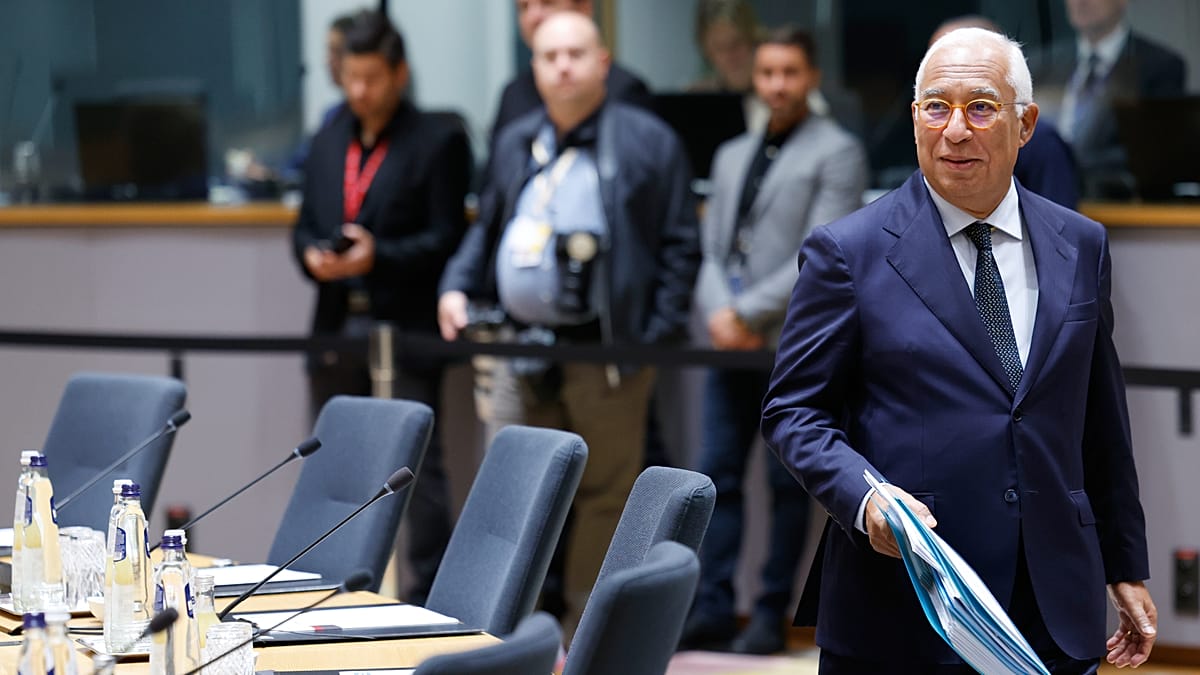
The first day of the EU summit was dominated by the fight over the next long-term budget. At the end of an inconclusive day of talks, António Costa, the president of the European Council, took charge of the negotiations. He has committed to present a new compromise with revised figures ahead of a special summit next month.
Inconclusive sparring at EU summit puts budget timeline into question
EU leaders stuck to their red lines on the next long-term budget at Thursday’s summit, with several now rejecting the presumed December deadline. Council Presi…